A hair transplant offers a promising solution for individuals struggling with hair loss. However, just as important as the procedure itself is the recovery period that follows. The first 10 days after a hair transplant are a critical phase during which the transplanted hair follicles adapt to their new locations and tissue healing begins. In this guide, we examine in detail what you may experience in the first 10 days, what to pay attention to, and the correct care methods.
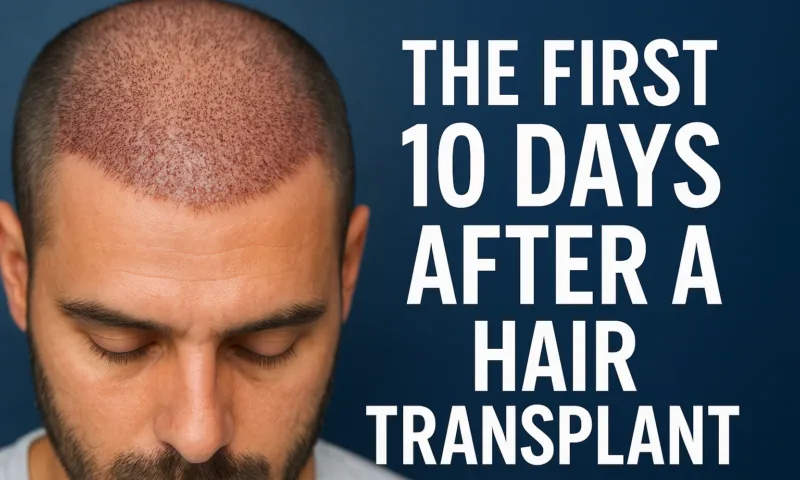
The First 10 Days After a Hair Transplant
Possible Symptoms and Care Recommendations
The first 10 days require careful and attentive management. Almost every change you experience during this period is part of the natural healing process.
Swelling and Bruising
In the first few days after the procedure, swelling and bruising may occur on the forehead and around the eyes. This is related to the local anesthesia used and the nature of the surgery.
Ready to Get Started?
Contact us today for a free consultation and take the first step towards your transformation.
Get Free ConsultationRecommendation:
- Sleep with your head elevated on a high pillow.
- Apply cold compresses as advised by your doctor.
- Avoid leaning your head forward during the first 48 hours.
Swelling usually improves on its own within 3–5 days.
Pain and Sensitivity
Mild pain, tenderness, or a feeling of tightness in the transplanted area and donor site is normal. This discomfort is generally short-lived.
Recommendation:
Use the painkillers prescribed by your doctor regularly to keep the discomfort under control.
Crusting and Redness
Small crusts will form in the transplanted area due to dried blood and tissue fluid. Mild redness is also common.
Recommendation:
- Never scratch or pick at the crusts.
- The first wash is usually performed by the clinic.
- For subsequent washes, follow your doctor’s instructions, using gentle movements and the special shampoo and lotion provided.
- Allow the crusts to fall off naturally over time.
First Hair Wash and Subsequent Washes
The first hair wash is generally done on the 2nd or 3rd day after surgery and is an important part of the healing process.
Recommendation:
- Let the first wash be done at the clinic or under their supervision.
- For later washes, use lukewarm water and wash gently with your fingertips without pressure.
- Foam the shampoo and lotion in your hands first, then apply gently to the scalp.
- Do not hold the showerhead directly over the transplanted area while rinsing.
Sleeping Position
Correct sleeping position during the first 10 days is vital to protect the grafts.
Recommendation:
- Sleep on your back with your head slightly elevated (using a high pillow or travel pillow).
- Avoid friction between the transplanted area and the pillow or bedsheet.
Physical Activity and Sweating
Avoiding intense physical exertion and sweating is important during this period.
Recommendation:
- Avoid heavy lifting, brisk walking, running, intense exercise, sexual activity, and any activity that causes heavy sweating.
- Sweating can increase the risk of infection and may damage the transplanted follicles.
Sun Exposure and Environmental Factors
The transplanted area must be protected from the sun, dust, and extreme temperatures.
Recommendation:
- When going outside, use a wide, loose hat or beanie approved by your doctor that does not put pressure on the transplanted area.
- Avoid direct exposure to sunlight.
Nutrition and Habits
Healthy nutrition supports the healing process.
Recommendation:
- Completely avoid smoking and alcohol. These substances impair circulation, slow healing, and can reduce graft survival rates.
Infection Risk
If hygiene rules are not followed or medical advice is ignored, infection risk increases.
Recommendation:
- Take all antibiotics and other prescribed medications regularly.
- In case of excessive redness, increased swelling, intensifying pain, fever, or unusual discharge, contact your clinic immediately.
Remember: Shock Shedding Is Coming
After the first 10 days, usually from the second week onwards, a process called “shock shedding” begins. During this phase, a large portion of the transplanted hairs temporarily fall out. This is a natural and expected part of the process and indicates that the follicles are adapting to their new locations and entering a resting phase.
Within 3–4 months, stronger and more permanent hairs will start to grow in their place.
Always Prioritize Communication with Your Clinic
During the first 10 days and beyond, never hesitate to contact the clinic that performed your transplant with any questions or concerns. Expert teams will provide accurate information and the support you need. Strictly following all instructions given by your doctor is the most important step toward a successful and satisfying hair transplant result.